


As most of you know, I'm a big believer in off-camera flash to improve the quality of my reception photos. I recently upgraded to using Canon 600EX-RTs and wrote a review of these incredible pieces of technology here and an in-depth post about my settings for them here.
I thought it might be helpful to start a series where I share more about my specific lighting set-up at each reception I shoot, along with photos of the results. So this is the first post in what I hope is an ongoing, helpful series -- but you photographers out there, let me know!
I shot Zach and Kim's wedding last month in San Diego at the Hilton Mission Bay. Their reception was in a beautiful ballroom. I thought it was beautiful, anyhow, when compared with the black box, no window, character-less ballrooms that I tend to shoot in at Arizona weddings. It had some good light (at least for the little bit of time that the sun was still up) and some nice white reflective ceilings that weren't too terribly high. I loved the colors in the room and it just had a good, light, open feel to it. Here's a photos of part of the room (I'm standing on the dance floor):
I thought it might be helpful to start a series where I share more about my specific lighting set-up at each reception I shoot, along with photos of the results. So this is the first post in what I hope is an ongoing, helpful series -- but you photographers out there, let me know!
I shot Zach and Kim's wedding last month in San Diego at the Hilton Mission Bay. Their reception was in a beautiful ballroom. I thought it was beautiful, anyhow, when compared with the black box, no window, character-less ballrooms that I tend to shoot in at Arizona weddings. It had some good light (at least for the little bit of time that the sun was still up) and some nice white reflective ceilings that weren't too terribly high. I loved the colors in the room and it just had a good, light, open feel to it. Here's a photos of part of the room (I'm standing on the dance floor):

When I come into a reception space, I generally only have moments to assess the situation and make a decision about where to put my light stand. Like I mentioned in this post -- I try to find a place in the room where I can put the light stand that is out of the way and where I can easily pivot it to be equidistant from the different points of action - toasts, dancing and cake-cutting. It was a little tricky in this room to find a good spot for my light stand, but this is what I ended up with:
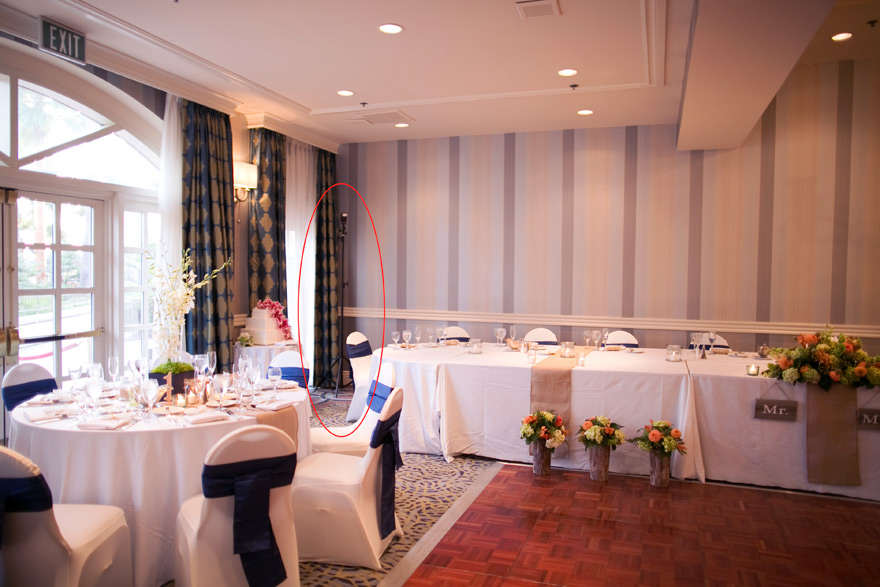
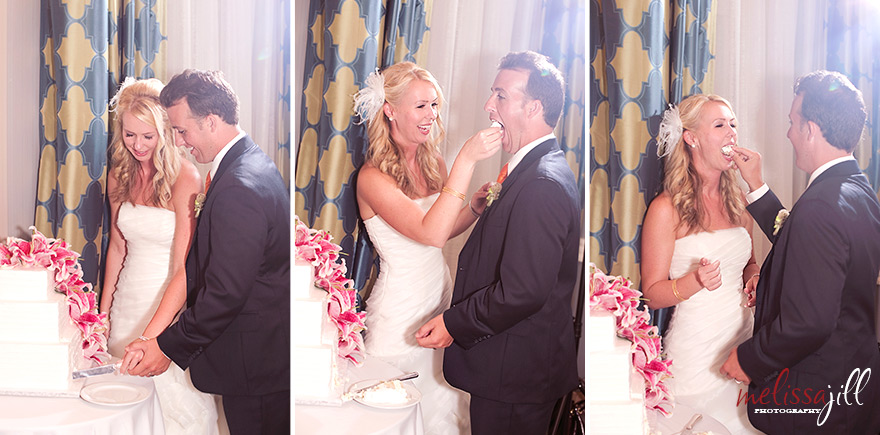
As far as picking a spot for the light stand that is equidistant from the toasts, dance floor and cake, I got two out of the three with this spot. As you can see in the photo above, the cake table was only a few feet from this corner, so it was a lot closer to the light stand than I would normally want, but I just made sure to turn down my flash power considerably before these shots, and I think they turned out pretty good:
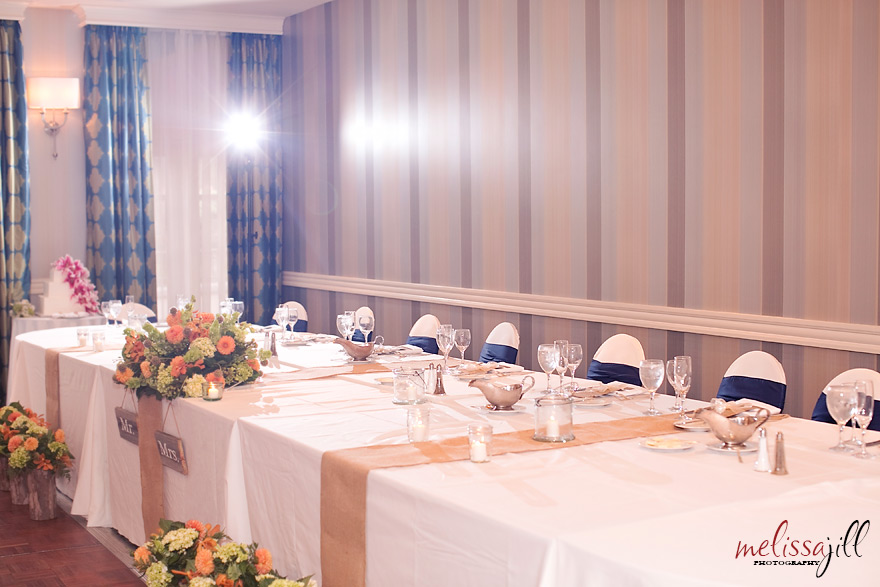
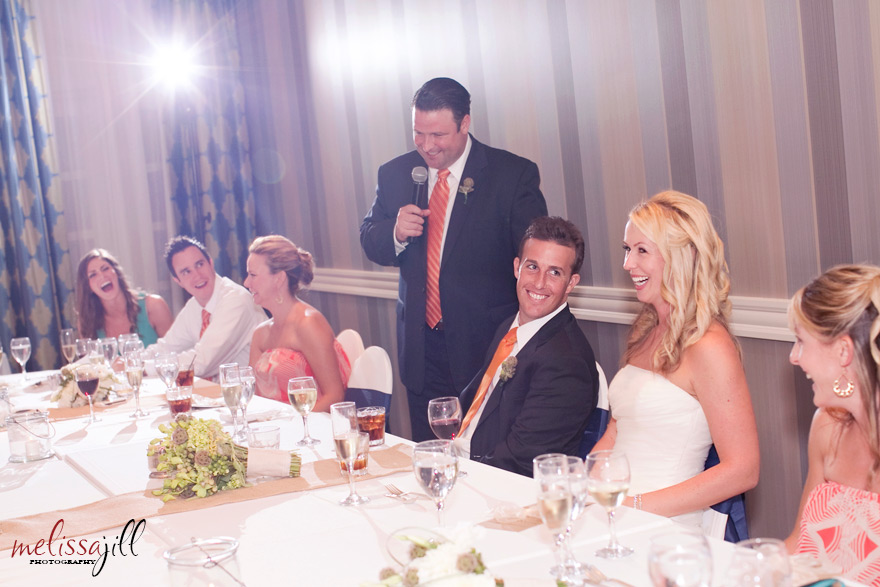
If at all possible, I also like to have the light stand in a spot where it can provide some back-lighting to the bride & groom during the toasts. The head table was right against that wall, so this was one of the only spots available that would provide the back-lighting I wanted.
I did a quick test shot for toast photos:
I did a quick test shot for toast photos:
And it ended up working out great:
Since I shoot into my off-camera flash so much, I also try to choose a spot that provides a pleasing back-drop and this side of the room was great. Here's a quick test shot of the dance floor while the tech guys were setting up for a slideshow. If possible, I like to take test shots with people in them -- even if it's my assistant standing on the dance floor, so I can look at my LCD and see what I've got.
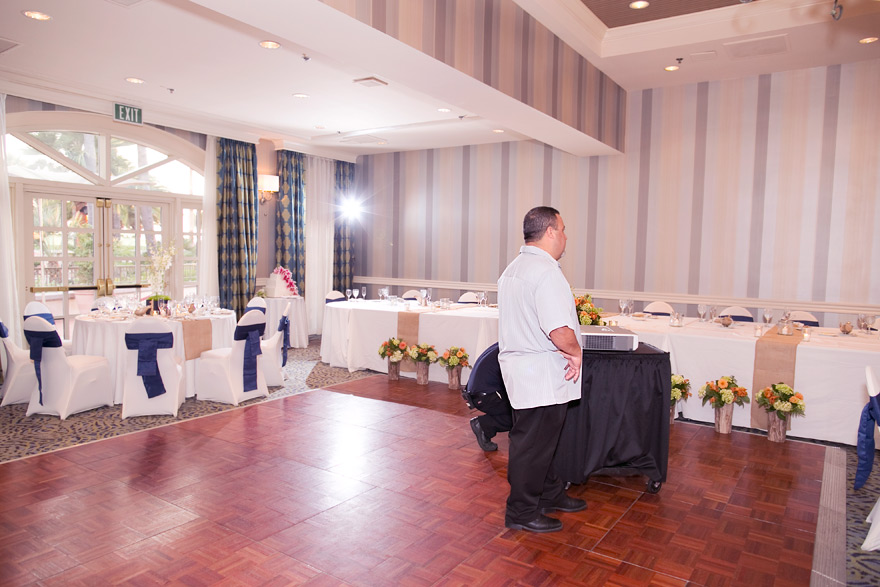
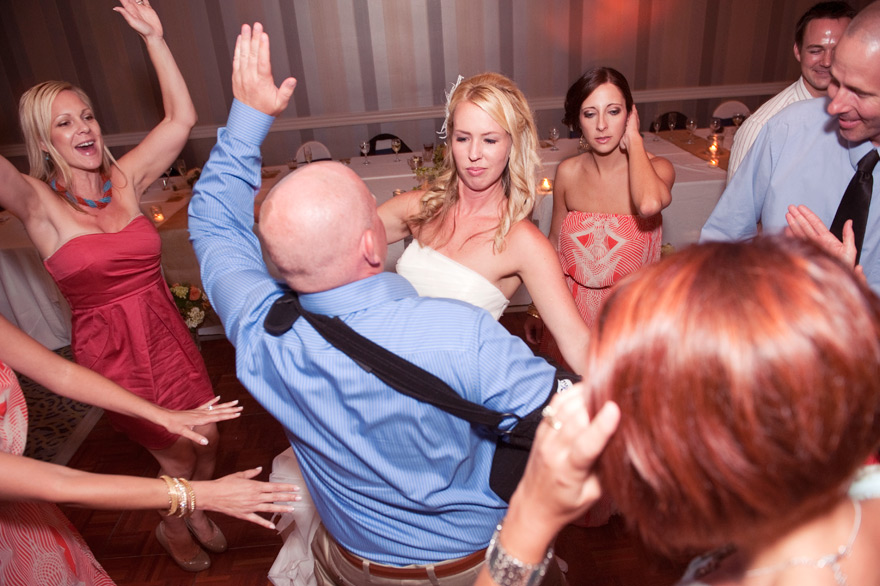
As you can see in the above photo, there was a lower ceiling along the side of the room where the light stand was and then a soffit that separated that space from the rest of the room. This presented a small challenge in that I had a lot more light reflecting in the space by the lower ceiling, and got less out of my off-camera flash when I was shooting a subject outside of that space. But it really wasn't that big of a deal. There were so many reflective surfaces, that I got a lot of bounce. Plus even if it didn't back-light the subject really well outside of that space, it still brightened up the background and provided more three-dimensionality to the image. By way of comparison, here are two photos shot by my 2nd shooter, Tanya, who was only using on-camera flash that night:
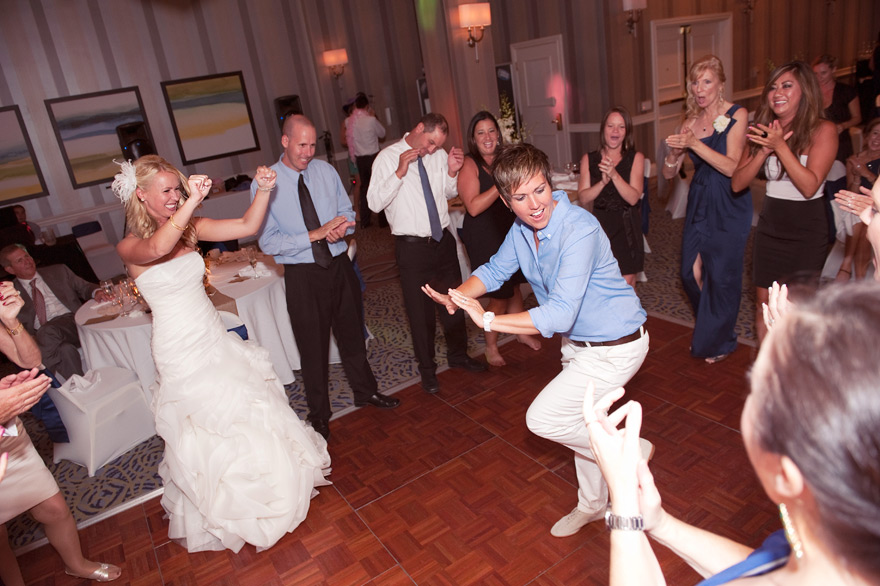
They work, but the space looks like a black hole in the background and none of the great color in the room comes through.
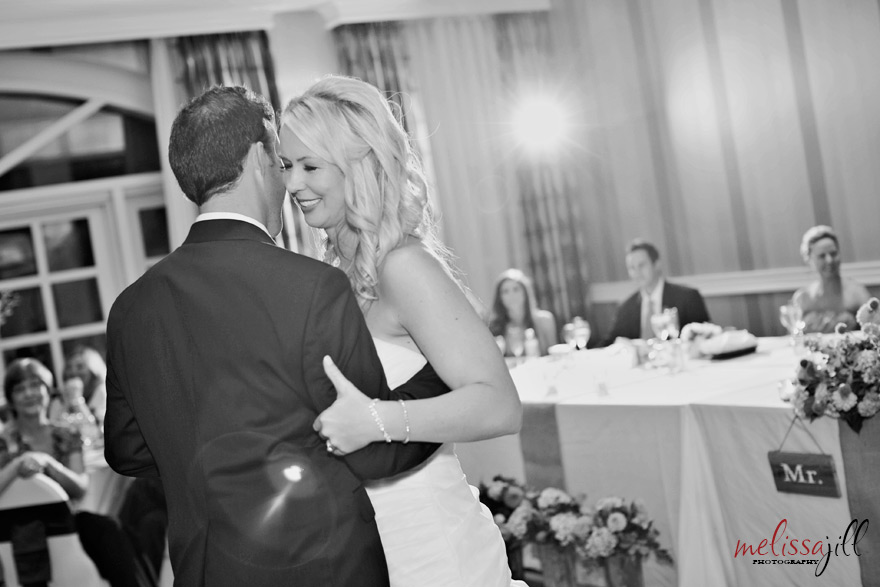
In contrast, this is what I was able to get with one on-camera and one off-camera flash:
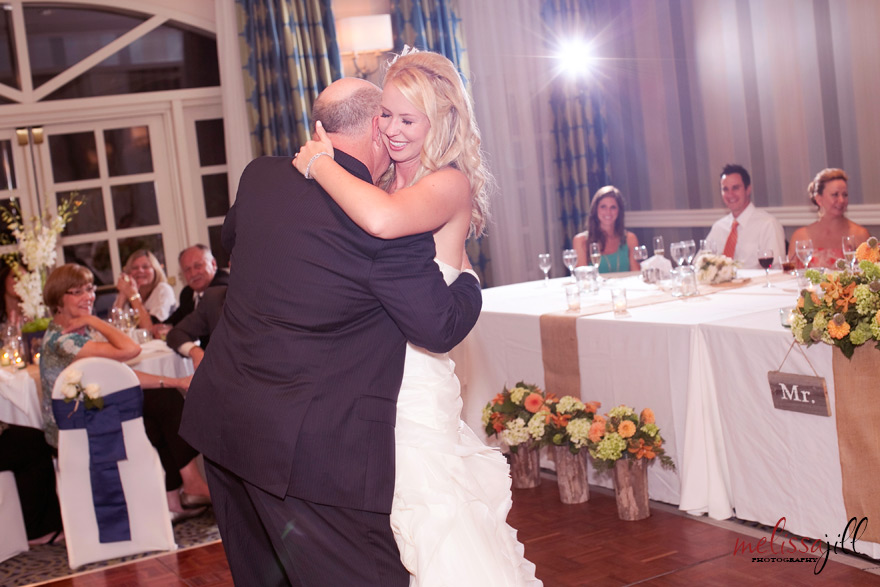
Love it!
To see more photos from Zach and Kim's wedding click here. If you have questions about anything related to flash at receptions, click here to opt-in for my free video series -- 6 Hacks to Eliminate Boring Low-Light Photos and Get You Creating Reception Image you LOVE! In it I share my best 6 tips for shooting with flash. If you are intimidated by flash and wanting to conquer it once and for all, this is a great place to start!
Comments


