


I can't believe I haven't done a FAQ post since June! Crazy. Sorry to all my photographer-type readers--I've totally lapsed on this front. My goal is to post on a FAQ every Friday--so stay tuned!
This is a huge question I've been asked a bunch of times recently:
This is a huge question I've been asked a bunch of times recently:

The short answer is that you can find workshops that will spend entire days on this subject. One that I would highly recommend is the One Light Workshop. I've attended and hosted this one-day intensive workshop on off-camera flash and it has revolutionized my reception lighting. If you can't make it to the workshop, Zack has made a DVD that you could purchase that would give you all the info.
So I'm not going to get too technical in explaining all the variables that go into off-camera flash, but I'll give you a quick crash course on what works for me.
The equipment I use:
Avenger 10.8' Light Stand
2 Canon 580EX Speedlites modified by Michael Bass
2 PocketWizard Plus II Transceiver/Relay Radio Slaves
Gary Fong's Lightsphere II
Stroboframe Flash Mount Adapter
Umbrella Bracket for the light stand
2 Batter Packs for Canon Pro Flash Units
All of these can be found on my B&H list of gear except the umbrella bracket (the one I have is out of stock).
I set up the light-stand with one of the speedlites on it and also attach a pocketwizard and battery pack. I put the other speedlite on my camera with the lightsphere and screw the 2nd pocketwizard into the bottom of my camera--attaching it to the on-camera flash. I set the light-stand set-up 10-15' off the dance floor and point the speedlite at a 90 degree angle right at it. I put my off-camera flash on 1/64 or 1/128 power on manual mode and my on camera flash on ETTL to use as fill. I then play with my ISO and aperture to get the correct exposure. Shutter speed doesn't affect flash exposure--just the ambient lighting so I oftentimes set it at 1/15 of a second to bring more of the ambient light into the shot. The flash will freeze the subject that it hits so you don't have to worry about blur at slow shutter speeds except for blurred ambient light, which can be kinda nice. I talk more about this here.
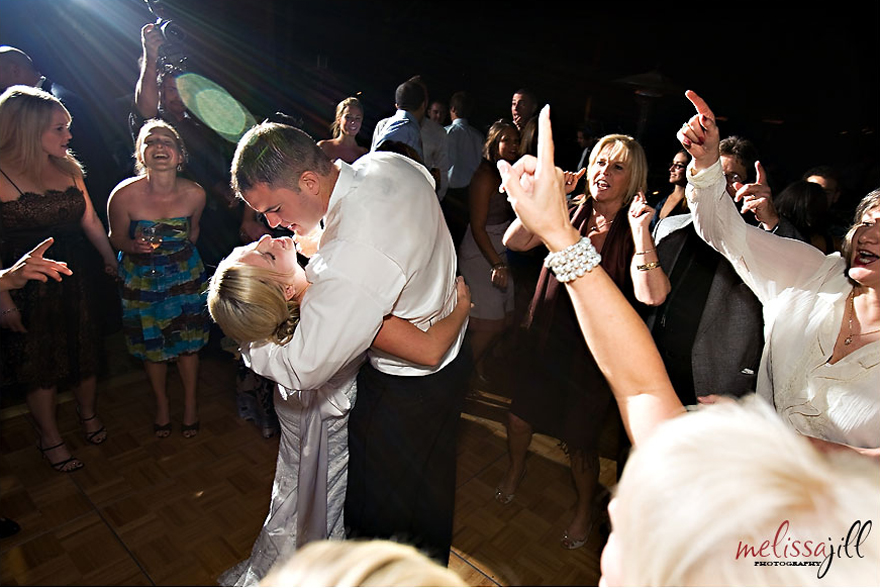
In the top photo, you can tell that my light-stand is off to the left side of the dance floor. I like to move around my subject for different lighting effects. But I stay in the 180 degree radius that keeps me either at 90 degrees from the light stand or shooting straight into it. I don't stand by the light stand since it is bare-bulb and is somewhat harsh light that causes yucky shadows. But I LOVE shooting into the off-camera flash and using it as part of my composition. Here's a few examples of that:
So I'm not going to get too technical in explaining all the variables that go into off-camera flash, but I'll give you a quick crash course on what works for me.
The equipment I use:
Avenger 10.8' Light Stand
2 Canon 580EX Speedlites modified by Michael Bass
2 PocketWizard Plus II Transceiver/Relay Radio Slaves
Gary Fong's Lightsphere II
Stroboframe Flash Mount Adapter
Umbrella Bracket for the light stand
2 Batter Packs for Canon Pro Flash Units
All of these can be found on my B&H list of gear except the umbrella bracket (the one I have is out of stock).
I set up the light-stand with one of the speedlites on it and also attach a pocketwizard and battery pack. I put the other speedlite on my camera with the lightsphere and screw the 2nd pocketwizard into the bottom of my camera--attaching it to the on-camera flash. I set the light-stand set-up 10-15' off the dance floor and point the speedlite at a 90 degree angle right at it. I put my off-camera flash on 1/64 or 1/128 power on manual mode and my on camera flash on ETTL to use as fill. I then play with my ISO and aperture to get the correct exposure. Shutter speed doesn't affect flash exposure--just the ambient lighting so I oftentimes set it at 1/15 of a second to bring more of the ambient light into the shot. The flash will freeze the subject that it hits so you don't have to worry about blur at slow shutter speeds except for blurred ambient light, which can be kinda nice. I talk more about this here.
In the top photo, you can tell that my light-stand is off to the left side of the dance floor. I like to move around my subject for different lighting effects. But I stay in the 180 degree radius that keeps me either at 90 degrees from the light stand or shooting straight into it. I don't stand by the light stand since it is bare-bulb and is somewhat harsh light that causes yucky shadows. But I LOVE shooting into the off-camera flash and using it as part of my composition. Here's a few examples of that:
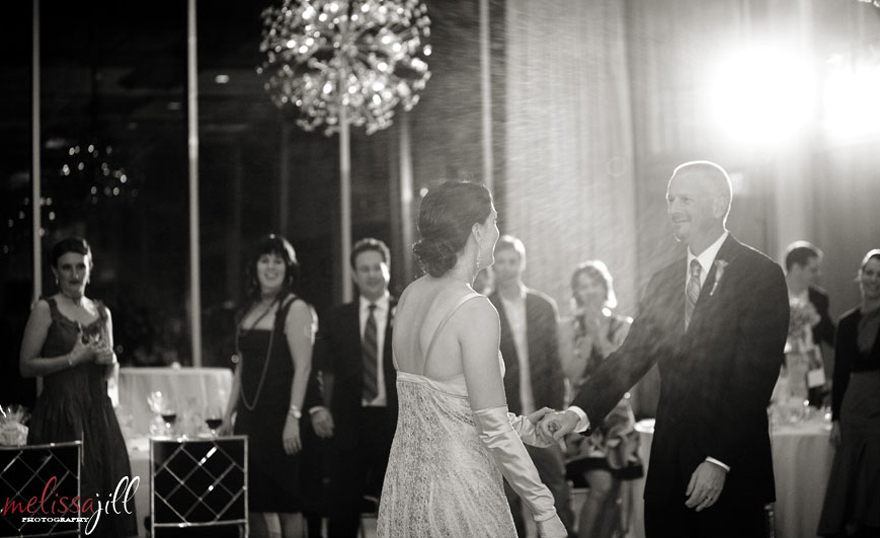
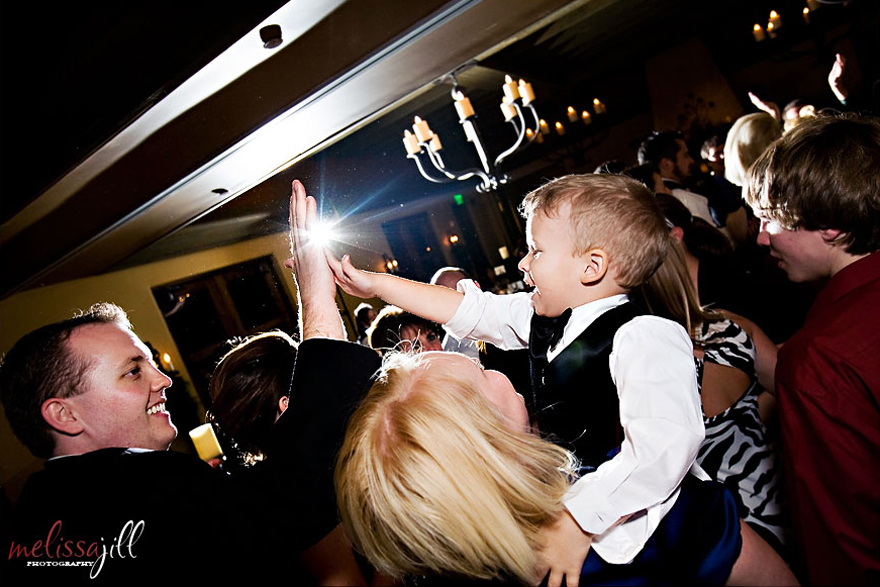
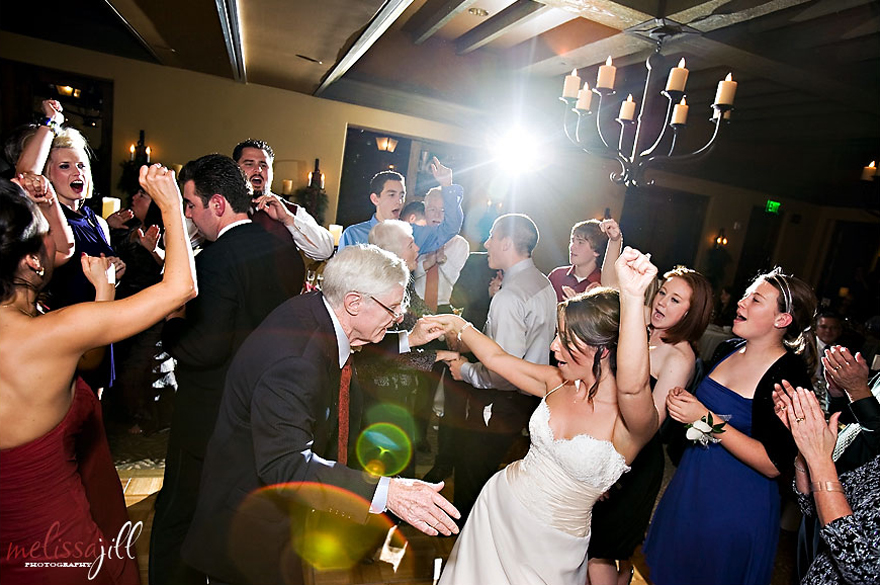
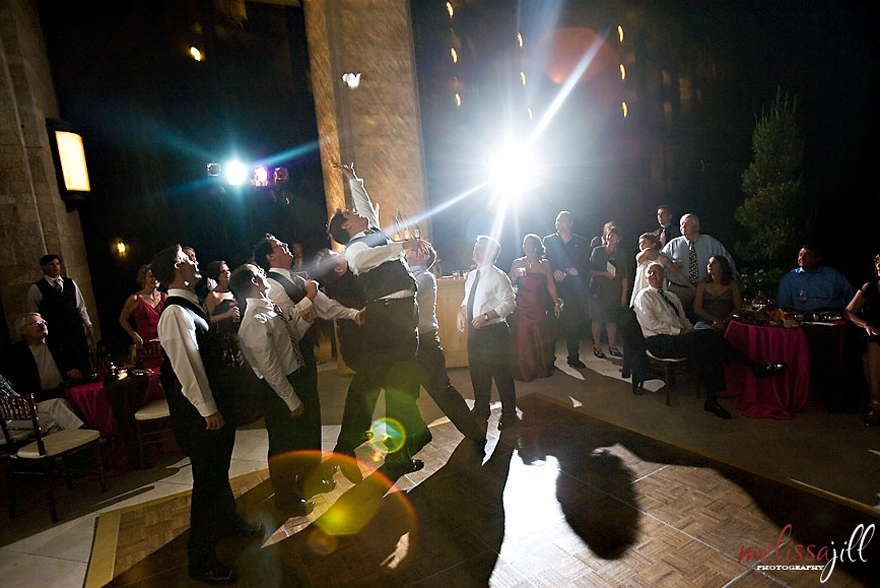
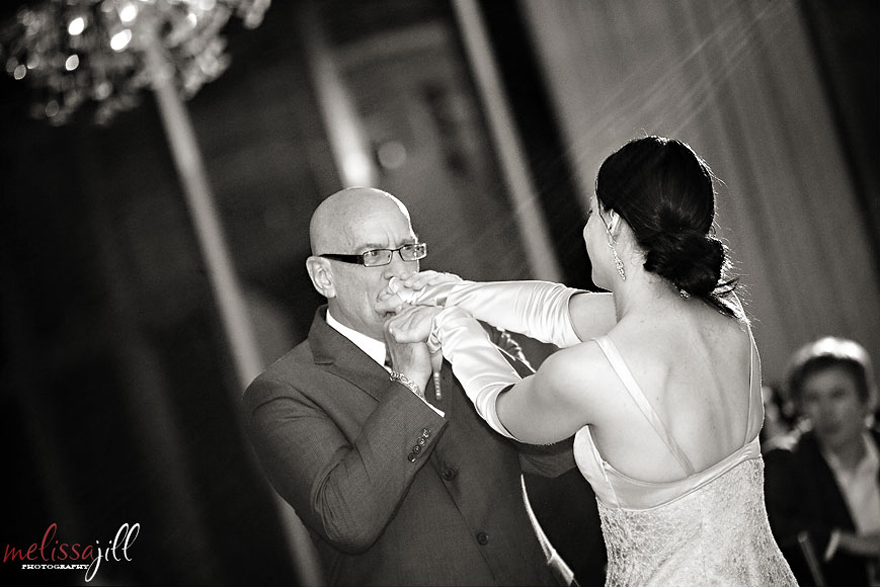
If you move around your subject, you'll get different flare effects. Here's a few where you can actually see the streams of light coming from the off-camera flash:
Cool stuff! In the next couple weeks I'll continue on the topic of reception lighting and talk more about using slow shutter speeds to your advantage for some cool effects and a great trick that will make focusing in low-light situations easier. So stay tuned!
Comments


